Glass Science Blog
Insights into glass science, research developments, and industry applications.
8 articles
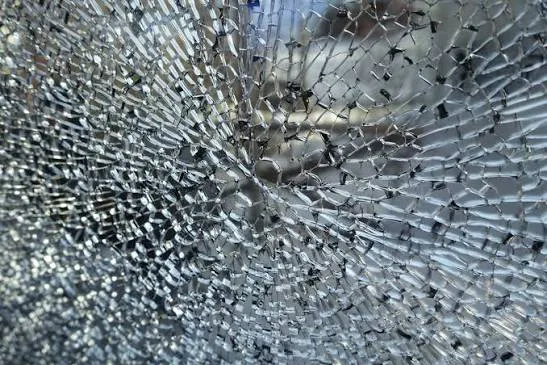
Why Does Tempered Glass Shatter into Small Pieces?
How thermal tempering strengthens glass, why stored elastic energy drives fragmentation, and how tempered, heat-strengthened and laminated glass differ.
How Is the Refractive Index of Glass Measured?
How prism and V-block methods measure the refractive index of glass, and why wavelength, temperature and uncertainty matter when comparing results.
Why Does Glass Crack When Heated? Thermal Shock Explained
Why sudden heating or cooling can crack glass, how borosilicate glass helps, and what to check when choosing glass for a changing thermal environment.
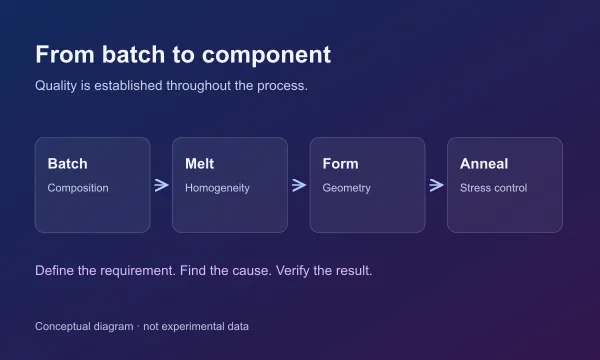
How Is Glass Made? From Raw Materials to a Finished Product
Glass manufacturing explained through composition, melting, forming and annealing, with practical questions for diagnosing defects and planning materials R&D.
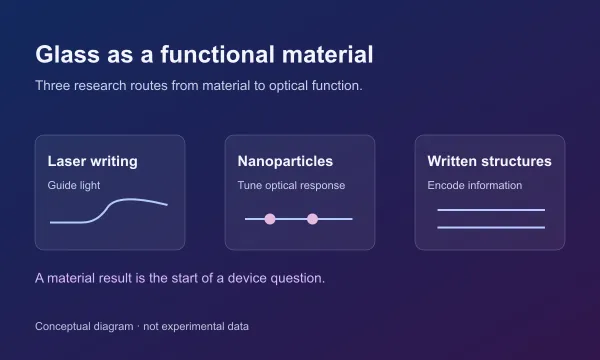
The Future of Glass: Laser Writing, Photonics and Data Storage
How glass can guide light, host functional nanoparticles and store information—and how to distinguish a laboratory result from a practical photonic device.
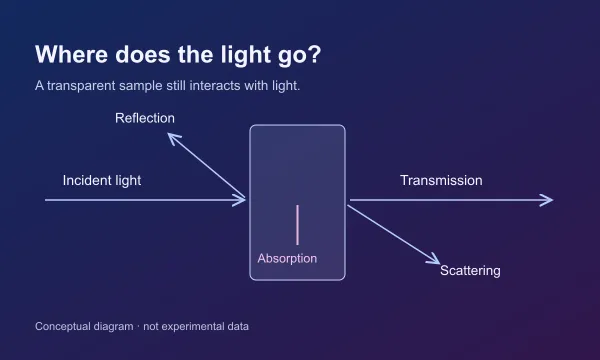
Why Is Glass Transparent? Absorption, Scattering and Color
Why light passes through some glasses, why others are colored or cloudy, and how thickness and wavelength change what transparency really means.
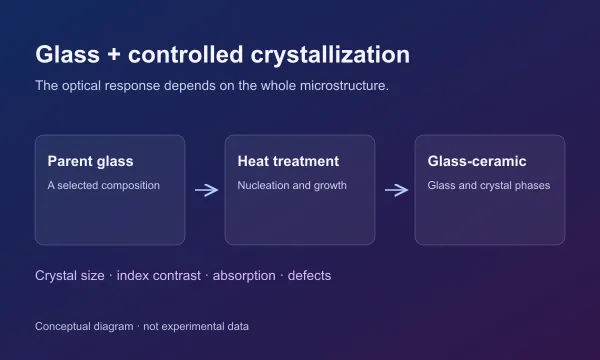
Transparent Glass-Ceramics: How Crystals and Clarity Can Coexist
What are glass-ceramics, and why can some remain transparent? Explore controlled crystallization, light scattering and the trade-offs in stronger optical materials.
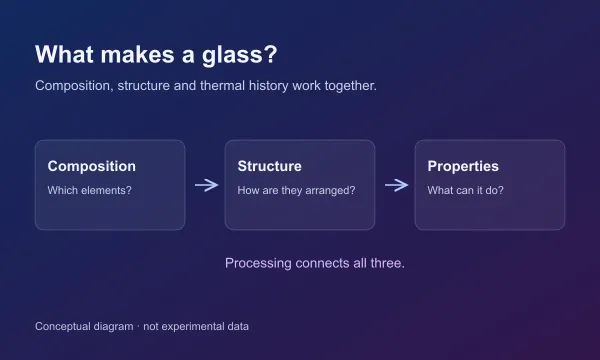
What Is Glass? Structure, Composition and the Glass Transition
Is glass a solid or a liquid? Understand its non-crystalline structure, the glass transition and why composition matters more than appearance.